Mastering Your Circadian Rhythm: A Guide to Ideal Sleep Times
For millennia, humanity lived in sync with the sun. Our days began with its ascent, our work ebbed with its decline, and our bodies found rest in the deep embrace of night. This ancient rhythm, etched into our very DNA, guided every aspect of our existence. Yet, in the dazzling, relentless glow of the 21st century, we have largely severed this primal connection. The incandescent hum of screens, the relentless demands of a 24/7 economy, and the sheer volume of stimuli have cast us adrift, untethered from our innate biological compass. The result? A silent epidemic of chronic sleep deprivation, metabolic dysfunction, cognitive fog, and a pervasive sense of dis-ease that whispers, "Something isn't quite right."
This is not merely a story about sleep; it is a profound narrative about re-establishing harmony with our deepest biological blueprint. It is a journey back to ourselves, guided by the invisible, intricate dance of our circadian rhythm. For the knowledgeable seeker, for those who understand that true wellness extends beyond superficial fixes, mastering this internal clock is not just an optimization – it is a revolution.
The Grand Symphony: Understanding the Circadian Rhythm
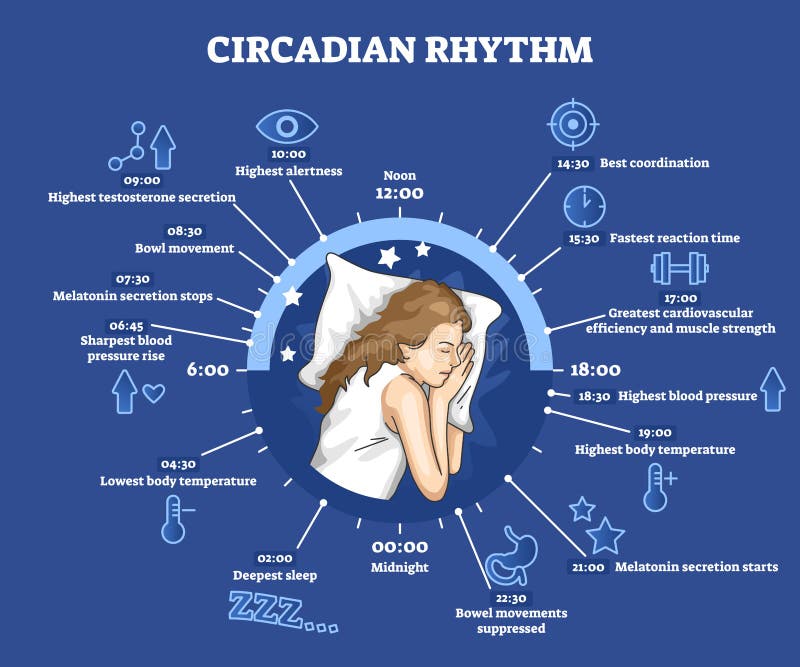
At its core, the circadian rhythm is an endogenous, approximately 24-hour cycle that orchestrates nearly every physiological process within our bodies. From hormone release and body temperature fluctuations to metabolic rate and cognitive function, this masterful internal clock dictates the optimal timing for almost all our biological functions. It is the silent conductor of our internal symphony, ensuring each instrument plays its part at the precise moment.
The Master Conductor: The Suprachiasmatic Nucleus (SCN)
Deep within the hypothalamus, nestled just above where the optic nerves cross, lies the brain's primary pacemaker: the Suprachiasmatic Nucleus, or SCN. Comprising roughly 20,000 neurons, the SCN is the undisputed master clock. Its direct, non-image-forming connection to the retina means it constantly receives information about ambient light, allowing it to synchronize our internal rhythm with the external world. Think of it as the ultimate timekeeper, receiving its crucial cues from the sun and then broadcasting these time signals throughout the entire body.
The SCN doesn't just respond to light; it generates its own rhythmic oscillations through a complex interplay of "clock genes" (like PER, CRY, CLOCK, and BMAL1) and their protein products. These proteins fluctuate in a 24-hour cycle, creating a self-sustaining feedback loop that drives the rhythm even in the absence of external cues. This intrinsic rhythm is why, even in constant darkness, humans would still maintain a roughly 24-hour cycle, albeit one that might drift slightly.
The Orchestra: Peripheral Clocks
While the SCN is the grand conductor, it doesn't play a solo performance. Nearly every cell, tissue, and organ in our body possesses its own "peripheral clock." These peripheral clocks, found in the liver, pancreas, gut, muscles, and even fat cells, have their own clock gene machinery and operate autonomously to some extent. However, for the body to function coherently, they must be synchronized with the master SCN.
The SCN achieves this synchronization through a variety of mechanisms: neural signals, hormonal cues (like cortisol and melatonin), and even body temperature fluctuations. This intricate network ensures that, for instance, your liver is primed to process nutrients when you typically eat, your muscles are ready for activity at a certain time, and your immune system is regulated across the day. When the SCN and peripheral clocks are out of sync – a state known as internal desynchronization – it’s akin to an orchestra playing different tunes, leading to metabolic chaos and widespread dysfunction.
Key Hormones and Neurotransmitters: The Symphony's Instruments
The circadian rhythm is expressed through a cascade of hormones and neurotransmitters, each playing a vital role in dictating our state of wakefulness, alertness, and readiness for sleep.
Melatonin: The Hormone of Darkness: Often called the "sleep hormone," melatonin is produced by the pineal gland. Its release is profoundly influenced by light: bright light, especially blue light, suppresses its production, while darkness signals its release. Melatonin doesn't directly induce sleep but rather signals to the body that it's biologically night, reducing alertness and preparing the body for rest. Its peak release typically occurs in the middle of the night, gradually declining as morning approaches.
Cortisol: The Hormone of Wakefulness: In stark contrast to melatonin, cortisol, often associated with stress, plays a crucial role in our wake-sleep cycle. Levels naturally peak in the early morning, often before we even wake up, providing the energetic surge needed to begin the day. This "cortisol awakening response" helps mobilize glucose, suppress inflammation, and promote alertness. Levels gradually decline throughout the day, reaching their lowest point in the evening, paving the way for melatonin release. An inverse relationship between cortisol and melatonin is a hallmark of a healthy circadian rhythm.
Adenosine: The Sleep Pressure Accumulator: Unlike hormones directly controlled by the SCN, adenosine is a byproduct of cellular energy metabolism. As our cells burn ATP (adenosine triphosphate) for energy throughout the day, adenosine accumulates in the brain. The longer we're awake, the more adenosine builds up, binding to receptors and progressively inhibiting wake-promoting neurons. This increasing "sleep pressure" is what makes us feel tired and is the primary driver of the homeostatic sleep drive, working in tandem with the circadian rhythm to ensure we sleep when our body needs it. Caffeine, famously, works by blocking adenosine receptors.
Serotonin and Dopamine: Mood, Alertness, and Precursors: These neurotransmitters play critical roles in mood, motivation, and alertness. Serotonin, for instance, is a precursor to melatonin, highlighting the interconnectedness of our daily functions. Dopamine, often associated with reward and pleasure, is crucial for sustained wakefulness and focus. Their rhythmic fluctuations are also influenced by the circadian clock, impacting our cognitive performance and emotional state throughout the day.
Chronotypes: The Individual Variations
While the 24-hour rhythm is universal, the precise timing of our internal clock varies significantly from person to person. This individual difference is known as our "chronotype." You might be a "lark" (early bird), a "night owl" (evening type), or somewhere in between (a "hummingbird"). These chronotypes are not simply lifestyle choices; they are largely genetically determined, influenced by variations in those very clock genes mentioned earlier.
- Larks: Feel most alert and productive in the morning, prefer to go to bed early, and wake up naturally at dawn. Their peak alertness and core body temperature often occur earlier in the day.
- Owls: Feel most awake and productive in the evening, prefer to go to bed late, and wake up later in the morning. Their peak alertness and core body temperature occur later.
- Hummingbirds: Represent the majority, falling somewhere in the middle, adapting more readily to conventional societal schedules.
Understanding your chronotype is a crucial first step in mastering your circadian rhythm. Fighting against your innate chronotype, forcing a lark to stay up late or an owl to rise at 5 AM, leads to chronic sleep deprivation, reduced performance, and a feeling of perpetual "social jet lag."
The Zeitgebers: External Cues that Tune the Clock
If the SCN is the conductor, then "zeitgebers" (German for "time-givers") are the external cues that tune the orchestra, ensuring its synchronization with the world outside. These environmental signals are paramount in entraining our internal clock.
Light: The Most Powerful Zeitgeber
Light is, without a doubt, the single most powerful zeitgeber. Its impact on the SCN is direct and profound, essentially resetting the clock daily.
- Morning Light: The Awakening Signal: Exposure to bright light, especially natural sunlight, within the first hour of waking is critical. It powerfully suppresses melatonin production, boosts cortisol, and signals to the SCN that the day has begun. This morning light exposure helps to "phase advance" our rhythm, ensuring we wake up at the correct time each day. It enhances alertness, mood, and cognitive function for the hours that follow.
- Evening Light: The Sleep Disruptor: Conversely, exposure to bright light, particularly blue-spectrum light (emitted by screens like phones, tablets, and computers), in the hours leading up to bedtime is highly disruptive. Blue light is particularly effective at suppressing melatonin production, sending a confusing signal to the SCN that it's still daytime. This "phase delays" our rhythm, pushing back our natural sleep onset and contributing to insomnia and delayed sleep phase syndrome.
Food & Meal Timing: The Metabolic Clocks
Beyond light, food and its timing are powerful zeitgebers for our peripheral clocks, especially those in metabolic organs like the liver and pancreas.
- Consistent Meal Times: Eating at regular, predictable times reinforces the rhythm of these peripheral clocks.
- Avoiding Late-Night Eating: Consuming heavy meals close to bedtime sends conflicting signals to the body. The digestive system, primed for activity during the day, is forced to work when it should be winding down. This can disrupt sleep, impair metabolic function (leading to insulin resistance and weight gain), and confuse the peripheral clocks.
- Time-Restricted Eating (TRE): This increasingly popular approach, where all daily food intake is confined to a specific window (e.g., 8-10 hours), can be a powerful tool for synchronizing peripheral clocks and enhancing metabolic health, provided it aligns with the individual's natural circadian rhythm.
Exercise: The Body's Rhythmic Movement
Physical activity is another significant zeitgeber, influencing body temperature, hormone release, and overall energy expenditure.
- Timing of Exercise: Moderate-to-vigorous exercise in the morning or early afternoon can enhance sleep quality by promoting a greater drop in core body temperature later in the evening. It can also boost morning cortisol and mood.
- Avoiding Late-Night Intense Exercise: Engaging in intense workouts too close to bedtime can elevate core body temperature and stimulate the sympathetic nervous system, making it difficult to fall asleep. However, gentle exercise like stretching or yoga can be beneficial.
Social Cues & Routine: The Human Element
Humans are creatures of habit, and our social lives inherently provide rhythmic cues.
- Consistency: A consistent daily routine – waking up, eating, working, and sleeping at roughly the same times – acts as a powerful zeitgeber, reinforcing the SCN's synchronization with the external world.
- Social Jet Lag: The common phenomenon of deviating significantly from one's weekday sleep schedule on weekends (e.g., staying up late and sleeping in) is known as "social jet lag." This creates a chronic misalignment between our internal clock and our social clock, leading to many of the same negative health consequences as actual jet lag.
Temperature: The Sleep Thermostat
Our core body temperature naturally fluctuates throughout the 24-hour cycle, dropping significantly in the evening to facilitate sleep onset and rising in the morning to promote wakefulness.
- Ideal Sleep Environment: A cool sleep environment (typically 60-67°F or 15-19°C) supports this natural temperature drop, making it easier to fall and stay asleep. A warm bath or shower before bed can paradoxically aid sleep by raising core body temperature, which then rapidly drops upon exiting, signaling to the body that it's time to sleep.
The Unraveling: Consequences of Circadian Disruption
When we ignore or actively fight our circadian rhythm, the consequences are far-reaching and detrimental, extending well beyond simply feeling tired. It's a fundamental disruption of our biological operating system.
- Sleep Debt & Insomnia: The most immediate and obvious consequence. Chronic misalignment makes it difficult to fall asleep, stay asleep, and achieve restorative sleep, leading to an accumulating "sleep debt."
- Metabolic Syndrome & Weight Gain: Disrupted rhythms impair glucose metabolism, leading to insulin resistance, increased appetite (especially for unhealthy foods), and fat storage. Shift workers, for instance, have significantly higher rates of obesity and type 2 diabetes.
- Cardiovascular Disease: Chronic circadian disruption is linked to elevated blood pressure, increased risk of heart attacks, and other cardiovascular problems.
- Mental Health Disorders: The SCN directly influences brain regions involved in mood regulation. Circadian misalignment is a strong risk factor for depression, anxiety, bipolar disorder, and other mood disturbances.
- Cognitive Decline: Focus, memory, decision-making, and problem-solving abilities are severely compromised when our internal clock is out of sync. Reaction times slow, and errors increase.
- Immune Dysfunction: Our immune system also operates on a circadian rhythm. Disruption can weaken immune responses, making us more susceptible to infections, and potentially increasing the risk of chronic inflammatory conditions and certain cancers.
- Accelerated Aging: At a cellular level, chronic circadian disruption is associated with increased oxidative stress and telomere shortening, hallmarks of accelerated aging.
The modern predicament, with its pervasive artificial light, constant connectivity, irregular work schedules, and late-night social norms, inherently wages war against our ancient biological programming. We are, quite literally, living against our nature, and our bodies are registering the protest.
The Path to Harmony: A Guide to Ideal Sleep Times
Reclaiming your circadian rhythm is not about rigid adherence to an arbitrary schedule, but rather a journey of attentive listening and intelligent adaptation. It's about aligning your daily life with your inherent biological predispositions. Here's a practical guide:
Step 1: Discover Your Chronotype
Before you can align, you must first understand your unique biological timing.
- The "Free Run" Method: The most accurate way is to allow yourself to "free run" for a few days, ideally during a vacation. Go to bed only when you feel genuinely tired and wake up naturally without an alarm clock. Note your natural sleep onset and wake-up times. This will reveal your inherent chronotype.
- Self-Assessment Questionnaires: Several online questionnaires (e.g., the Munich Chronotype Questionnaire) can provide a good indication.
- Listen to Your Body: When do you naturally feel most energetic? When do you typically hit a slump? When do you crave sleep? These are all clues.
- Acceptance, Not Resistance: The key is to accept your chronotype. If you're an owl, fighting to become a lark will be a perpetual uphill battle, leading to chronic sleep deprivation. While societal demands might require some adjustments, understanding your baseline allows for smarter compromises.
Step 2: Anchor Your Wake-Up Time – The North Star
This is arguably the single most important habit for circadian mastery.
- Consistency is King: Wake up at the same time every single day, including weekends, holidays, and even after a poor night's sleep. This consistent wake-up time is the strongest signal you can send to your SCN, anchoring your entire rhythm.
- The "Story" of Consistency: Imagine your SCN as a highly sophisticated clock that needs regular calibration. If you calibrate it at 6 AM on weekdays and 10 AM on weekends, it gets confused, constantly trying to adjust, never truly settling into an optimal rhythm. This is social jet lag in action. A consistent wake-up time allows your SCN to confidently predict the start of your day, setting off a cascade of appropriate hormonal releases.
- Gradual Adjustment: If your current wake-up time is erratic, gradually shift it by 15-30 minutes each day until you reach your desired, consistent time.
Step 3: Optimize Light Exposure – The Circadian Tuner
Leverage light as the powerful zeitgeber it is.
- Morning Light Ritual: Within 30-60 minutes of waking, expose yourself to bright natural light. Step outside for 10-30 minutes (even on cloudy days, outdoor light is significantly brighter than indoor light), sit by a window, or use a dawn simulator or light therapy lamp (10,000 lux) if outdoor light isn't feasible. This signals to your SCN that the day has begun, boosts cortisol, and suppresses melatonin, making you feel more awake and alert.
- Daytime Brightness: Maximize natural light exposure throughout the day. Work near a window, take outdoor breaks. This reinforces the "daytime" signal.
- Evening Light Hygiene (The "Dimming" Story): As evening approaches, begin to dim the lights. Two to three hours before your desired bedtime, drastically reduce exposure to bright, especially blue, light.
- Screens: Activate blue light filters on all electronic devices (night shift mode) or use blue light blocking glasses. Better yet, minimize screen time altogether.
- Lighting: Use dim, warm-toned lights (red/orange spectrum) in your home. Avoid overhead fluorescent or LED lights.
- Candles/Himalayan Salt Lamps: These can be excellent for creating a sleep-conducive ambiance.
Step 4: Master Meal Timing – The Metabolic Orchestrator
Align your eating patterns with your body's natural metabolic rhythm.
- Consistent Meal Schedule: Eat your meals at roughly the same times each day. This helps synchronize your peripheral clocks, particularly those in your digestive system.
- Front-Load Your Calories: Aim to consume the majority of your calories earlier in the day.
- The "Early Dinner" Rule: Avoid large meals, sugary snacks, or excessive alcohol within 3-4 hours of bedtime. Digestion is an active process that can interfere with sleep onset and quality. The body's metabolic efficiency decreases in the evening, making late-night eating more likely to lead to fat storage and metabolic dysfunction.
- Hydration: Stay well-hydrated throughout the day, but taper off liquid intake in the evening to avoid nighttime bathroom trips.
Step 5: Strategize Exercise – The Energizing Rhythm
Time your physical activity for optimal benefit.
- Morning/Afternoon Sweet Spot: For most individuals, moderate-to-vigorous exercise is best performed in the morning or afternoon. This can boost energy during the day and contribute to a deeper temperature drop at night, aiding sleep.
- Avoid Late-Night Intensity: Intense exercise too close to bedtime (within 3-4 hours) can elevate core body temperature and activate the sympathetic nervous system, making it harder to wind down.
- Gentle Evening Movement: Lighter activities like stretching, gentle yoga, or a leisurely walk can be beneficial in the evening, helping to release tension without overstimulating the body.
Step 6: Cultivate a Pre-Sleep Ritual – The Decompression Chamber
The transition from wakefulness to sleep requires intentional effort in our overstimulated world.
- The "Winding Down" Story: Imagine your body and mind as a finely tuned engine that's been running all day. You wouldn't immediately shut it off from full throttle. You'd allow it to cool down, to decompress. Your pre-sleep ritual is that decompression chamber.
- Consistency: Engage in a consistent, calming routine for 30-60 minutes before your desired bedtime. This signals to your body that sleep is approaching.
- Activities:
- Warm Bath/Shower: The subsequent cooling of your body helps facilitate the temperature drop needed for sleep.
- Reading: A physical book, not on a backlit device.
- Meditation/Mindfulness: Focus on your breath, practice gratitude.
- Gentle Stretching/Yoga: Release physical tension.
- Journaling: Empty your mind of worries or to-do lists.
- Listen to Calming Music/Audiobook: Ensure it's not too engaging.
- Avoid: Screens, stimulating conversations, work, stressful news, intense problem-solving.
Step 7: Optimize Your Sleep Environment – The Sanctuary
Your bedroom should be a haven for sleep, free from distractions.
- Darkness: Make your bedroom as dark as possible. Use blackout curtains, an eye mask. Even a sliver of light can disrupt melatonin production.
- Quiet: Minimize noise. Use earplugs, a white noise machine, or a fan if necessary.
- Coolness: Maintain a cool room temperature, ideally between 60-67°F (15-19°C). This supports your body's natural temperature drop for sleep.
- Comfort: Invest in a comfortable mattress, pillows, and bedding.
- Electronics Out: Remove all electronic devices from the bedroom. They emit light, create mental distraction, and can be a source of electromagnetic fields (EMFs).
Step 8: Napping – The Strategic Pause
Naps can be a powerful tool, but timing is everything.
- The "Power Nap": A short nap (10-20 minutes) can boost alertness and performance without causing grogginess (sleep inertia).
- Timing: The ideal time for a nap is during your natural mid-afternoon energy dip, typically between 1 PM and 3 PM, depending on your chronotype.
- Avoid Late Naps: Napping too late in the day can interfere with nighttime sleep.
- Naps are Not a Substitute: Naps should supplement, not replace, adequate nighttime sleep.
Step 9: When to Seek Professional Help
While these strategies are highly effective, some individuals may face persistent challenges.
- Persistent Insomnia: If you consistently struggle to fall or stay asleep for more than a month, despite implementing lifestyle changes.
- Symptoms of Sleep Apnea: Loud snoring, gasping for air during sleep, excessive daytime sleepiness.
- Severe Daytime Fatigue: Despite adequate sleep duration.
- Consult a Professional: A sleep specialist, a physician specializing in sleep medicine, or a cognitive behavioral therapist (CBT-I) can provide diagnosis and tailored treatment plans.
Beyond Sleep: The Holistic Impact of Circadian Mastery
The journey of mastering your circadian rhythm is not a mere quest for better sleep; it is a profound commitment to living in alignment with your authentic biological self. The benefits ripple outwards, touching every facet of your existence.
Imagine waking up naturally, feeling genuinely refreshed, without the jarring assault of an alarm clock. Picture your mind sharp and clear throughout the day, your energy levels sustained, your mood stable and resilient. Envision a body that functions optimally, metabolizing food efficiently, resisting illness robustly, and radiating vitality. This is the transformation that awaits.
By understanding the intricate dance of your SCN, the powerful influence of zeitgebers, and the subtle cues of your own chronotype, you move beyond simply getting sleep to truly mastering your sleep. You become the conscious conductor of your internal symphony, ensuring every instrument plays in perfect harmony.
This is not a destination but a continuous process of self-experimentation, attentive listening to your body, and intelligent adaptation. It is an invitation to reclaim a fundamental aspect of your well-being, to live more authentically, powerfully, and vibrantly in tune with the ancient rhythms that govern us all. In mastering your circadian rhythm, you unlock not just ideal sleep times, but a blueprint for an optimized, harmonious life.


