Beyond the Squat: Your Plan for Bulletproof Knees
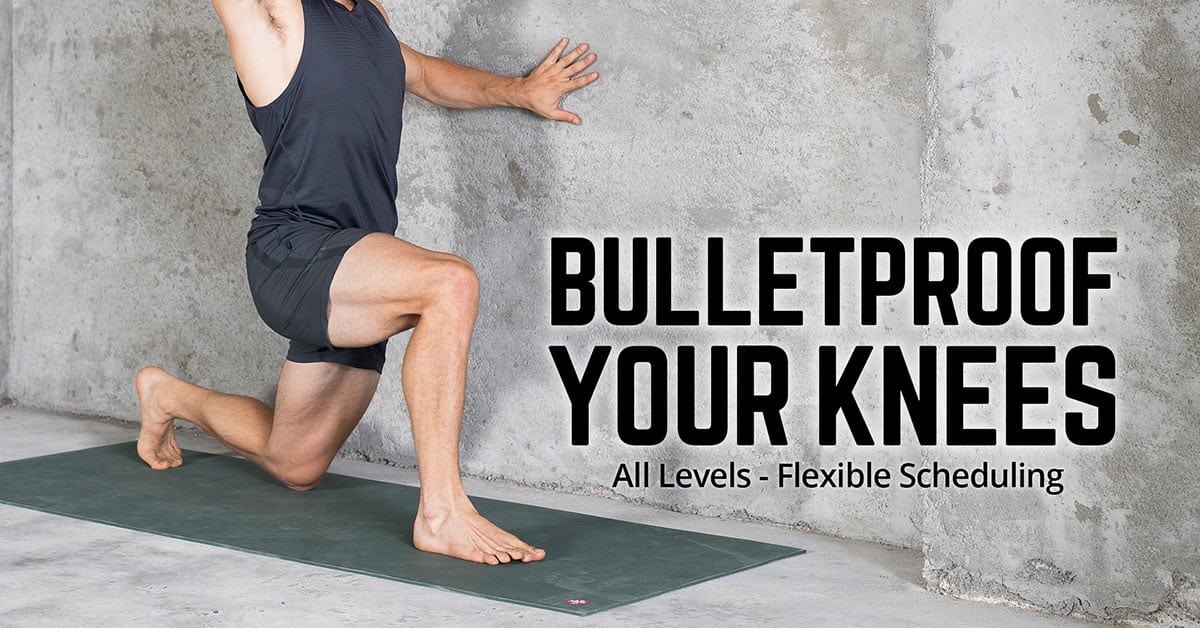
The creak. The twinge. The dull ache that lingers after a long run, a heavy lift, or even just a day spent on your feet. For many of us, the knees, those complex, weight-bearing marvels of engineering, become a silent barometer of our body's overall health and the demands we place upon it. We've been told to squat – and rightly so, for the squat is a king among exercises – but what happens when the very movement designed to strengthen seems to amplify the vulnerability?
This isn't just an article; it's an invitation to a journey. A journey beyond the conventional wisdom, past the limitations you might feel, and towards a state of true knee resilience. We’re not just talking about pain management; we’re talking about creating knees so robust, so adaptable, so bulletproof, that they become an unshakeable foundation for whatever life throws at you.
You, the knowledgeable audience, are likely familiar with the mechanics of the squat, the glute activation cues, and the importance of ankle mobility. But our story begins by acknowledging that the squat, while fundamental, is merely one chapter in a much larger narrative of knee health. To truly fortify these joints, we must look beyond, delving into the intricate interplay of mobility, stability, strength, and proprioception that collectively forge a resilient knee.
Chapter 1: The Misunderstood Monarch – Re-evaluating the Squat
Let's begin by addressing the elephant in the room: the squat itself. Often unfairly demonized as a knee-killer, the truth is far more nuanced. A properly executed squat is a masterpiece of human movement, loading the knees through a full range of motion, strengthening the quadriceps, hamstrings, and glutes, and improving hip and ankle mobility. It's a primal pattern, essential for daily life and athletic prowess.
However, the improper squat, or the squat performed in isolation without addressing underlying deficiencies, can indeed become a vector for injury. The story of knee pain often begins here, not with the exercise itself, but with the context in which it's performed.
Consider the common culprits:
- Valgus Collapse: That inward buckling of the knees, often due to weak glute medius muscles, poor foot mechanics, or tight adductors. This places immense stress on the medial collateral ligament (MCL) and the patellofemoral joint.
- Insufficient Ankle Dorsiflexion: Limits the forward translation of the shin, forcing the hips to drop excessively or the lumbar spine to round, shifting load inappropriately.
- Poor Hip Mobility: Restricts the ability to achieve depth, leading to compensations further down the kinetic chain.
- Quad Dominance with Weak Hamstrings/Glutes: Creates an imbalance where the quads pull excessively on the patella, contributing to tracking issues and patellofemoral pain syndrome.
- Lack of Core Stability: The trunk is the anchor for the hips and legs. A wobbly core compromises the entire system.
- Progressive Overload Gone Rogue: Too much weight, too soon, without adequate foundational strength or recovery.
Our goal isn't to abandon the squat, but to elevate its execution by building the prerequisites for a healthy, powerful squat, and then supplementing it with movements that address the knee's multi-faceted needs. Think of it as preparing the entire kingdom for the arrival of its king.
Chapter 2: The Blueprint – Understanding the Knee's Interconnected Universe
To build a bulletproof knee, we must first understand its architecture and its profound connection to the entire body. The knee is not an isolated hinge; it’s the vital intersection of the hip and the ankle, intimately affected by the stability of the core and the health of the foot. This is the essence of the kinematic chain – a disruption anywhere along the line can manifest as pain or dysfunction at the knee.
The Anatomy in Brief (for the Knowledgeable):
- Bones: Femur (thigh bone), Tibia (shin bone), Patella (kneecap).
- Ligaments: ACL (anterior cruciate), PCL (posterior cruciate), MCL (medial collateral), LCL (lateral collateral) – these are the static stabilizers, preventing excessive movement.
- Menisci: C-shaped cartilages that cushion the joint and absorb shock.
- Muscles: Quadriceps (vastus medialis, lateralis, intermedius, rectus femoris), Hamstrings (biceps femoris, semitendinosus, semimembranosus), Gastrocnemius (calf), Popliteus (small muscle behind the knee for unlocking). But let’s not forget the crucial influence of the Glutes (maximus, medius, minimus) and Hip Flexors (iliopsoas, rectus femoris again).
The Biomechanical Imperatives:
- Proximal Stability, Distal Mobility: The hip needs to be a stable powerhouse, capable of powerful extension, abduction, and rotation. The ankle needs excellent mobility, particularly dorsiflexion, to allow the shin to track over the foot. When the hip or ankle fail in their roles, the knee often becomes the sacrificial lamb, forced to compensate with excessive rotation or valgus/varus stress.
- Balanced Muscular Strength: The quads are essential for knee extension and patellar stability, but an overreliance or imbalance (e.g., strong quads, weak hamstrings) can pull the patella out of alignment, leading to anterior knee pain. The hamstrings are crucial decelerators and provide posterior knee stability. The glutes are the prime movers for hip extension and external rotation, preventing valgus collapse and controlling femoral rotation.
- Proprioception and Neuromuscular Control: This is the body's internal GPS system – its ability to know where it is in space without visual input. Excellent proprioception allows for rapid, unconscious adjustments to maintain joint stability during dynamic movements. Without it, the knee is more susceptible to sudden twists and sprains.
- Load Management: Tissues adapt to stress, but only if the stress is progressive and allows for adequate recovery. Too much, too soon, or too often, and the adaptive capacity is overwhelmed, leading to inflammation, micro-tears, and chronic pain.
Our plan, therefore, is not merely a collection of exercises. It's a holistic strategy that addresses these biomechanical imperatives, strengthening the entire kinetic chain to create a fortress around the knee.
Chapter 3: The Pillars of Bulletproofing – Beyond the Squat's Shadow
To truly build bulletproof knees, we must erect several foundational pillars that support and enhance the squat, ensuring its safe and effective execution, while also preparing the knees for the myriad stresses of life and sport.
Pillar 1: Mobility – Unleashing the Flow
Restricted mobility at the hip or ankle places undue compensatory stress on the knee. We need to restore natural range of motion.
- Ankle Dorsiflexion: This is paramount. Limited dorsiflexion often forces the heels to lift during squats, shifting weight forward and increasing shear forces on the knee, or leads to compensatory internal rotation of the femur.
- Target: Gastrocnemius, Soleus, Tibialis Anterior.
- Hip Mobility: Adequate hip flexion, abduction, adduction, and rotation are crucial for allowing the femur to move freely within the acetabulum, preventing the knee from taking on torsional stress.
- Target: Hip flexors (psoas, rectus femoris), glutes, piriformis, adductors.
- Thoracic Spine Mobility: While seemingly distant, a stiff T-spine can affect overall posture, forcing compensations that ripple down to the pelvis and hips, ultimately impacting knee mechanics.
Pillar 2: Stability – Anchoring the Foundation
Stability isn't about being rigid; it's about controlled movement. The knee relies on dynamic stability from the surrounding musculature to track correctly and resist unwanted forces.
- Hip Stabilizers (Glute Medius/Minimus): These are the unsung heroes preventing valgus collapse during squats, lunges, and single-leg movements. They control femoral adduction and internal rotation.
- Core Stability: A strong, integrated core (transverse abdominis, obliques, multifidus, diaphragm, pelvic floor) acts as a stable base from which the limbs operate. Without it, the pelvis can tilt, creating an unstable platform for the hips and knees.
- Foot Intrinsic Muscles: The foot is the first point of contact with the ground. Weak arches or poor foot mechanics can lead to overpronation or supination, which translates into internal/external rotation up the kinetic chain to the knee.
Pillar 3: Strength – The Balanced Arsenal
While squats build strength, we need targeted strength work that addresses imbalances and fortifies all angles of the knee.
- Posterior Chain Dominance (Glutes & Hamstrings): Many strength programs become quad-dominant. Building robust hamstrings (eccentric strength for deceleration!) and powerful glutes is vital for balancing forces around the knee, preventing anterior knee pain, and providing crucial knee stability.
- Unilateral Strength: Life is rarely symmetrical. Walking, running, climbing stairs – these are single-leg activities. Unilateral exercises expose and correct left-right imbalances, enhance balance, and improve dynamic stability.
- Adductor Strength: Often overlooked, strong adductors (inner thigh muscles) contribute significantly to medial knee stability and counterbalance glute medius activity. Weak adductors can contribute to valgus collapse.
- Calf Strength (Gastroc & Soleus): Crucial for ankle stability, propulsion, and shock absorption. Strong calves also contribute to knee stability by resisting excessive dorsiflexion and providing a strong platform for movements.
Pillar 4: Proprioception & Neuromuscular Control – The Body's Internal GPS
This is where the "bulletproof" aspect truly shines. Training the nervous system to react quickly and appropriately to unexpected movements is key to injury prevention.
- Balance Training: Static and dynamic balance challenges improve the communication between the brain and the joint.
- Reactive Training: Incorporating plyometrics and agility drills, once foundational strength is established, teaches the body to absorb and redirect force efficiently, protecting the knee during dynamic actions.
- Eccentric Control: The ability to slowly and controllably lengthen a muscle under load is paramount for preventing injuries, especially in the hamstrings during deceleration.
Pillar 5: Progressive Overload & Intelligent Programming – The Long Game
No single exercise or session makes a knee bulletproof. It's the consistent, intelligent application of stress, followed by adequate recovery, that drives adaptation.
- Listen to Your Body: Pain is a signal, not a weakness to push through. Learn to differentiate between muscle fatigue and joint discomfort.
- Periodization: Varying training intensity and volume over time helps prevent overuse injuries and plateaus.
- Gradual Progression: Don't jump into advanced movements or heavy loads without mastering the basics. The journey to bulletproof knees is a marathon, not a sprint.
Chapter 4: The Arsenal – Exercises for Knee Resilience
Now, let's stock our arsenal with specific movements designed to target these pillars. Remember, execution is king. Focus on quality over quantity, and always prioritize proper form.
Mobility Drills (Pre-Workout or Daily)
- Ankle Dorsiflexion Wall Stretch: Kneel with one foot flat, toes close to a wall. Drive knee forward, aiming to touch wall while keeping heel down. Hold 30-60s per side. Progress by moving foot further back.
- Couch Stretch (Hip Flexor Mobility): One knee on the floor, shin against a wall. Other foot flat on the floor in front. Lean into stretch. Focus on posterior pelvic tilt to deepen hip flexor stretch. 60s per side.
- 90/90 Hip Internal/External Rotation: Sit on floor, knees bent 90 degrees, one leg internally rotated, other externally. Gently rotate hips to switch positions. Focus on keeping hips grounded. 10-15 reps per side.
- Adductor Rockbacks: Kneel, one leg extended to the side, foot flat. Rock hips back towards heel, feeling stretch in inner thigh. 10-15 reps per side.
Stability & Control Drills (Warm-up or Accessory)
- Single-Leg Balance (Progressive): Start barefoot on firm ground. Progress to unstable surfaces (foam pad, Bosu), eyes closed, adding light perturbations. 30-60s per leg.
- Clamshells (Banded): Lie on side, knees bent, feet stacked. Keep feet together, lift top knee against band resistance. Focus on glute medius activation, avoiding hip rotation. 15-20 reps per side.
- Banded Glute Bridges/Hip Thrusts: Lie on back, band above knees. Drive hips up, pushing knees out against band. Focus on full glute contraction. 15-20 reps.
- Side Plank with Hip Abduction: Hold side plank, then slowly raise and lower top leg. Challenges obliques and glute medius simultaneously. 10-15 reps per side.
- Foot Intrinsic Work (Toe Splay/Short Foot): Practice spreading toes, then actively shortening the foot arch without curling toes. Crucial for foot stability. 10-15 reps per foot.
Strength Building (Core of Your Program)
- Split Squats / Rear-Foot Elevated Split Squats (Bulgarian): Unilateral strength is key. Focus on vertical shin, driving through the front heel. Allows deeper knee flexion and challenges hip stability. 3 sets of 8-12 reps per leg.
- Lateral Lunges / Cossack Squats: Develop strength and mobility in the frontal plane. Essential for multi-directional stability and adductor strength. 3 sets of 8-12 reps per leg.
- Romanian Deadlifts (RDLs) / Single-Leg RDLs: Emphasize hamstring and glute eccentric strength. Keep a soft bend in the knee, hinge at the hip, maintain a neutral spine. 3 sets of 8-12 reps.
- Glute-Ham Raises / Nordic Curls: Advanced hamstring strength, particularly eccentric control. Start with assisted versions if needed. 3 sets of 5-10 reps.
- Copenhagen Planks: Excellent for adductor strength, crucial for medial knee stability. Progress from bent knee to straight leg. 3 sets of 30-60s holds per side.
- Calf Raises (Standing & Seated): Both gastrocnemius (standing, bent knee) and soleus (seated, straight knee) work are important. Focus on full range of motion. 3 sets of 15-20 reps.
- Terminal Knee Extensions (TKEs) with Band: Loop a band behind the knee, anchor it. Step back, allow slight knee bend, then actively straighten the knee, squeezing the quad. Excellent for VMO activation and patellar tracking. 3 sets of 15-20 reps.
- Step-Ups (Box Step-Ups / Lateral Step-Ups): Controlled movement, focusing on pushing through the heel, controlled descent. Excellent for quad, glute, and hamstring development. 3 sets of 10-15 reps per leg.
Proprioception & Dynamic Control (Advanced Stage)
- Box Jumps / Broad Jumps (Controlled Landing): Focus on soft, controlled landings, absorbing force through hips and knees. Start low, progress gradually. 3 sets of 5-8 reps.
- Agility Drills (Cone Drills, Lateral Shuffles): Teach the body to react and change direction efficiently, crucial for sports and dynamic daily life. Perform for short bursts (15-30s), 3-5 rounds.
- Single-Leg Hops / Bounds: Progress from short, controlled hops to longer bounds, emphasizing stable landings. 3 sets of 5-10 reps per leg.
Chapter 5: The Architect's Plan – Weaving it All Together
Having an arsenal of exercises is one thing; building a coherent, progressive plan is another. This is where the knowledgeable practitioner excels.
Your Weekly Blueprint (Sample Structure):
- Warm-up (5-10 minutes before every session): Light cardio, followed by dynamic mobility drills (ankle rocks, hip circles, cat-cow, T-spine rotations), and specific activation (banded glute bridges, bird-dog).
- Strength Sessions (3-4 times per week):
- Day 1 (Lower Body Focus):
- Compound Movement: Barbell Squats (if cleared and proficient) or Goblet Squats (focus on form) – 3-4 sets of 5-8 reps.
- Unilateral Strength: Rear-Foot Elevated Split Squats – 3 sets of 8-12 reps per leg.
- Posterior Chain: RDLs or Glute-Ham Raises – 3 sets of 8-12 reps.
- Accessory: Copenhagen Planks – 3 sets of 30-60s holds.
- Accessory: TKEs – 3 sets of 15-20 reps.
- Day 2 (Upper Body/Core Focus): (Not detailed here, but essential for overall balance).
- Day 3 (Lower Body Focus - Different Stimulus):
- Compound Movement: Deadlifts (conventional/sumo) or Trap Bar Deadlifts – 3-4 sets of 5-8 reps.
- Unilateral Strength: Lateral Lunges or Cossack Squats – 3 sets of 8-12 reps per leg.
- Hamstring Focus: Leg Curls (machine or Swiss ball) – 3 sets of 12-15 reps.
- Calves: Standing & Seated Calf Raises – 3 sets of 15-20 reps.
- Stability: Single-Leg Balance with perturbations – 3 sets of 30-60s per leg.
- Day 4 (Optional - Full Body/Conditioning/Plyometrics):
- Light Box Jumps (focus on landing) – 3 sets of 5 reps.
- Kettlebell Swings (hip hinge dominant) – 3 sets of 10-15 reps.
- Sled Pushes/Pulls (low impact, high quad/glute work) – 3-4 sets of 20-30m.
- Core Circuit.
- Cool-down (5-10 minutes): Static stretches for hips, hamstrings, quads, and calves. Foam rolling on quads, IT band, glutes, and calves.
Principles of Progression:
- Start Simple: Master bodyweight versions before adding load or complexity.
- Listen to Your Body: If an exercise causes sharp, localized pain, stop. Modify or choose an alternative.
- Progress Gradually: Increase reps, then sets, then load. Introduce unstable surfaces or plyometrics only when foundational strength and control are solid.
- Vary Stimuli: Don't get stuck in a rut. Periodically swap exercises, change rep ranges, or alter tempo to keep the body adapting.
- Deload: Incorporate lighter weeks every 4-6 weeks to allow for recovery and supercompensation.
Chapter 6: The Mindset & Lifestyle – Sustaining the Fortification
Building bulletproof knees is not just about the hours spent in the gym; it's a holistic commitment that extends to how you live your life.
- Patience and Persistence: Healing and strengthening take time. There will be good days and challenging days. Celebrate small victories and don't get discouraged by setbacks.
- Nutrition: Fuel your body with nutrient-dense foods to support tissue repair and reduce inflammation. Adequate protein for muscle repair, healthy fats for joint health, and plenty of fruits and vegetables for micronutrients.
- Sleep: This is where true recovery happens. Aim for 7-9 hours of quality sleep per night.
- Stress Management: Chronic stress elevates cortisol, which can impair recovery and increase inflammation. Incorporate mindfulness, meditation, or other stress-reducing practices.
- Hydration: Water is essential for joint lubrication and overall cellular function.
- Footwear: Choose shoes that support your natural foot mechanics, or consider minimalist footwear if appropriate for your foot type and activity level. Avoid constantly wearing shoes that elevate the heel, which can shorten calves and restrict ankle mobility.
- Movement Variety: Don't just stick to structured workouts. Walk, hike, cycle, swim – engage in diverse movements that challenge your body in different ways.
The Unwritten Chapter: Your Ongoing Story
This plan isn't a destination; it's a continuous journey. As you progress, your knees will become stronger, more resilient, and more adaptable. The creaks will subside, the twinges will become distant memories, and the dull ache will be replaced by a feeling of robust strength.
You'll find yourself approaching challenging movements with newfound confidence, knowing that your knees are not just surviving, but thriving. You’ll be able to squat heavier, run further, jump higher, and simply move through life with greater freedom and less fear.
Beyond the squat, you will have built a comprehensive fortress around your knees, transforming them from vulnerable points into pillars of strength. This is your plan for bulletproof knees – a testament to intelligent training, unwavering consistency, and a deep understanding of your body's incredible capacity for resilience. The story of your strong, pain-free knees is now yours to write. Begin today.


