Plate Portions: A Visual Odyssey Towards Perfectly Balanced Meals
In an era of unprecedented food abundance and relentless dietary information, the simple act of eating has become an intricate dance of choices, anxieties, and aspirations. From the siren song of ultra-processed convenience to the rigid dictates of restrictive diets, the modern individual often navigates a culinary landscape fraught with paradox. We crave nourishment, energy, and vitality, yet find ourselves adrift in a sea of conflicting advice, often disconnected from our innate bodily wisdom.
It is within this maelstrom of confusion that the humble concept of plate portions emerges not as another fleeting trend, but as a foundational principle, a visual anchor in the tempest. More than just a guide to 'how much,' plate portions offer a profound visual language, translating complex nutritional science into an intuitive, actionable framework for perfectly balanced meals. This is not merely about calorie counting or restrictive eating; it is an odyssey towards reclaiming our relationship with food, understanding its power, and harnessing it for optimal health, one thoughtfully composed plate at a time.
The Modern Dilemma: Lost in the Abundance
Our ancestors faced scarcity; their challenge was finding enough to eat. Our challenge is the opposite: discerning what and how much to eat amidst a seemingly endless buffet. The average supermarket boasts tens of thousands of items, each vying for our attention, often engineered for maximum palatability and minimal satiety. Portion sizes in restaurants have ballooned over decades, normalizing what was once considered an excessive serving. Food packaging, while legally obliged to carry nutritional information, often presents it in a dense, numerical format that few have the time or expertise to decipher accurately at every meal.
This environment fosters a disconnection. We outsource our hunger and satiety cues to external forces: the size of the package, the restaurant serving, the marketing message. Our internal wisdom, honed over millennia, atrophies. The result is a cascade of modern health challenges: rising rates of obesity, type 2 diabetes, cardiovascular disease, and a general malaise stemming from suboptimal nutrition. The knowledgeable individual, aware of these systemic pressures, seeks a more empowering approach – one that fosters autonomy and intrinsic understanding rather than reliance on external dictates.
The Genesis of the Visual Plate: A Historical Perspective
The idea of visually segmenting a meal for health is not entirely new, but its modern articulation has evolved significantly. Early dietary guidelines, such as the U.S. Department of Agriculture's Food Guide Pyramid introduced in 1992, attempted to simplify complex nutritional recommendations into a visual metaphor. While revolutionary for its time, the pyramid, with its broad base of grains, often led to an overemphasis on refined carbohydrates, contributing to a caloric imbalance for many. Its abstract, stacked design also lacked the immediate, practical applicability of a plate.
Recognizing these limitations, and driven by evolving nutritional science that increasingly highlighted the importance of fruits, vegetables, and lean proteins, the USDA transitioned to MyPlate in 2011. This iconic image, depicting a dinner plate divided into distinct sections for fruits, vegetables, grains, and protein, with a separate dairy cup, was a paradigm shift. It moved away from abstract hierarchies to a tangible, relatable object – the very plate from which we eat. This visual simplification, instantly understandable across diverse demographics, marked a pivotal moment in public health messaging, laying the groundwork for a more intuitive approach to portioning.
MyPlate’s genius lies in its immediate visual feedback. It doesn’t demand calculations or complex memorization; it asks, "Does your plate look like this?" This directness is particularly potent for a knowledgeable audience, who can appreciate the underlying scientific rationale while benefiting from the cognitive ease of a visual cue. It acknowledges that while we understand the importance of macronutrients and micronutrients, translating that understanding into daily meal preparation requires a more accessible mechanism.
The Science Behind the Segments: Why Visuals Work
At its core, the visual plate model is an elegant distillation of several key nutritional and psychological principles:
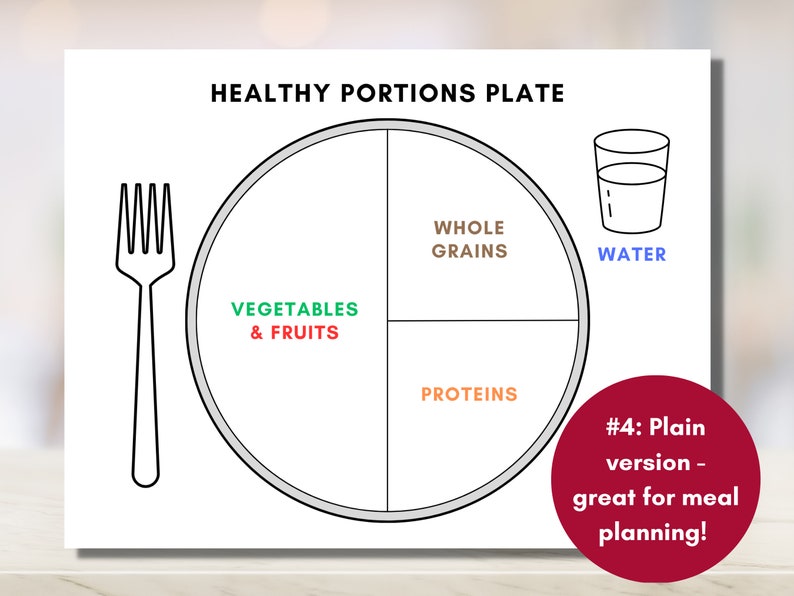
Macronutrient Partitioning: A well-balanced plate ensures an optimal distribution of carbohydrates, proteins, and fats – the three macronutrients vital for energy, repair, and overall bodily function. The typical visual plate encourages:
- Half a plate of non-starchy vegetables and fruits: Rich in fiber, vitamins, minerals, and antioxidants, these provide volume and satiety with relatively low caloric density. Their high fiber content slows digestion, contributing to stable blood glucose levels.
- A quarter plate of lean protein: Essential for muscle repair and growth, enzyme production, and satiety. Protein has a higher thermic effect of food (TEF) than carbohydrates or fats, meaning the body expends more energy to digest and metabolize it. It also stimulates the release of cholecystokinin (CCK) and peptide YY (PYY), hormones that signal fullness.
- A quarter plate of complex carbohydrates: Provide sustained energy release due to their slower digestion compared to simple sugars. Whole grains, legumes, and starchy vegetables offer fiber, B vitamins, and essential minerals.
Satiety and Energy Density: The plate model naturally promotes foods with a lower energy density (fewer calories per gram). By prioritizing vegetables and fruits, it encourages filling the stomach with nutrient-rich, high-volume, low-calorie foods. This mechanical stretch of the stomach, combined with the hormonal signals triggered by fiber and protein, effectively communicates fullness to the brain, preventing overconsumption of more calorie-dense items.
Blood Glucose Regulation: The balanced distribution of macronutrients, particularly the emphasis on fiber-rich vegetables and complex carbohydrates alongside protein, helps to stabilize blood glucose levels. This is crucial for sustained energy, preventing the sharp peaks and troughs that can lead to energy crashes, cravings, and long-term metabolic dysregulation. For individuals with or at risk of insulin resistance or type 2 diabetes, this aspect is profoundly beneficial.
Nutrient Synergy: A diverse plate ensures a broader spectrum of micronutrients. Different vitamins and minerals often work synergistically; for example, Vitamin C enhances iron absorption, and Vitamin D is crucial for calcium utilization. The visual guide inherently encourages this variety, moving beyond a narrow focus on single nutrients.
Cognitive Load Reduction: In a world demanding constant cognitive effort, simplifying food choices is a massive advantage. The visual plate acts as an immediate mental template, reducing decision fatigue. Instead of meticulously counting calories or grams, the brain performs a quick visual assessment, making healthier choices more accessible and sustainable in the long run. This bypasses the need for constant vigilance, freeing up mental resources.
The Visual Language Unpacked: A Practical Guide
The beauty of the visual plate is its adaptability and intuitive nature. While the MyPlate model provides a standard, other visual cues further enhance its applicability.
The Core Template: The Dinner Plate
Imagine a standard 9-inch dinner plate.
- Half of the plate (the largest section): This should be brimming with non-starchy vegetables. Think vibrant greens (spinach, kale, broccoli, asparagus), colorful bell peppers, zucchini, mushrooms, tomatoes, green beans, cauliflower. These can be raw, steamed, roasted, grilled, or sautéed with minimal healthy fats. A smaller portion of fruit can also occupy part of this half.
- One-quarter of the plate: This is dedicated to lean protein. Examples include chicken breast, turkey, fish (salmon, cod, tuna), lean beef or pork, eggs, tofu, tempeh, lentils, beans, or quinoa. The size should roughly approximate the palm of your hand (without fingers).
- The remaining quarter of the plate: This section is for complex carbohydrates. Opt for whole grains like brown rice, quinoa, whole-wheat pasta, oats, or starchy vegetables like sweet potatoes, corn, or peas. The portion size should be roughly equivalent to your cupped hand.
Beyond the Plate: The Hand Guide
For moments when a plate isn't readily available or for estimating individual portions more intuitively, the "hand guide" offers a remarkably effective and personalized metric, as hand size generally correlates with an individual's caloric and nutrient needs.
- Protein: A palm-sized portion (thickness and diameter of your palm, excluding fingers).
- Vegetables: A clenched fist or two (for non-starchy vegetables, you can often go larger).
- Carbohydrates: A cupped hand (for complex carbs like rice, pasta, potatoes).
- Fats: The tip of your thumb (for oils, butter, nuts, seeds).
These visual cues are not rigid rules but flexible guidelines, designed to empower rather than restrict. They offer a starting point, a framework from which to build and adapt.
Nuance and Adaptation: Tailoring the Plate for Individual Needs
While the core visual plate model provides an excellent foundation, a knowledgeable audience understands that optimal nutrition is rarely one-size-fits-all. The beauty of this framework is its inherent flexibility.
2. Weight Management (Loss or Gain):
- Weight Loss: The visual plate naturally supports caloric reduction by emphasizing low-energy-density vegetables. For further reduction, one might slightly reduce the carbohydrate and fat portions while maintaining or even slightly increasing lean protein for satiety. The focus shifts to maximizing nutrient intake while creating a sustainable caloric deficit.
- Weight Gain: Individuals aiming to gain weight will need to increase portion sizes across all categories, focusing on nutrient-dense options. Adding healthy fats (avocado, nuts, seeds, olive oil) and slightly larger portions of complex carbohydrates and proteins will be key.
- Protein: Sources like legumes (beans, lentils, chickpeas), tofu, tempeh, edamame, seitan, quinoa, and plant-based protein powders become central. It's crucial to ensure a diverse intake of plant proteins throughout the day to obtain all essential amino acids.
- Carbohydrates: Whole grains, starchy vegetables, and legumes often pull double duty as both carbohydrate and protein sources.
- Vegetables & Fruits: Remain the cornerstone, providing essential micronutrients and fiber.
5. Children and the Elderly:
- Children: Portions will be scaled down to their smaller appetites and energy needs. The visual model helps parents introduce balanced meals without micromanaging every bite, fostering healthy eating habits from a young age.
- Elderly: Nutritional needs can vary, but protein intake is often critical to combat sarcopenia (muscle loss). The visual plate, adapted for smaller appetites and potentially softer textures, can ensure adequate nutrient density.
Beyond the Meal: Mindful Eating and the Plate's Psychology
The visual plate is more than just a blueprint for food distribution; it’s an invitation to a more mindful relationship with eating.
1. Breaking the Habit Loop: Many of us eat out of habit, convenience, or emotional cues rather than true physiological hunger. The act of consciously composing a plate forces a pause, a moment of reflection. "Does this plate look balanced? Am I truly hungry? Am I eating mindfully?"
2. Cultivating Hunger and Satiety Awareness: By consistently eating balanced portions, individuals become more attuned to their body's internal signals. The sustained energy and stable blood sugar prevent extreme hunger, making it easier to recognize true satiety and stop eating when comfortably full, rather than overstuffed.
3. Overcoming External Cues: The visual plate empowers individuals to override external influences like oversized restaurant portions or marketing messages. It provides an internal compass, allowing them to confidently choose appropriate servings, even in challenging environments.
4. The Psychology of Abundance and Satisfaction: By filling half the plate with colorful, voluminous vegetables, the visual guide creates a sense of abundance and satisfaction without excessive calories. This psychological benefit is profound; it reframes healthy eating not as deprivation, but as generous nourishment.
5. Flexibility, Not Perfection: Crucially, the visual plate promotes progress over perfection. Some meals might not perfectly align, and that’s acceptable. The goal is a general pattern of balance over time, fostering a sustainable approach rather than rigid adherence that often leads to burnout.
Challenges and Solutions: Navigating the Real World
Implementing the visual plate model, while intuitive, does come with its own set of real-world challenges.
1. Dining Out: Restaurant portions are notoriously large and often unbalanced.
- Solution: Request half portions, ask for sauces on the side, prioritize vegetable-heavy appetizers, or immediately box half of your meal to take home. Mentally (or physically) divide your plate to match the visual guide. Don't be afraid to customize your order.
2. Social Situations and Peer Pressure: Eating differently from others can sometimes feel awkward.
- Solution: Focus on your plate, not others'. Politely decline extra servings if you’re full. Remember your personal health goals are paramount. Often, others are more concerned with their own plates than yours.
3. Meal Prepping and Planning: This is where the visual plate truly shines.
- Solution: Dedicate time once or twice a week to plan meals and prep ingredients. Chop vegetables, cook grains, and portion proteins. This makes assembly quick and easy during busy weekdays, ensuring consistent adherence to the visual guide.
4. Emotional Eating: Food can be a comfort, a coping mechanism.
- Solution: The visual plate won't solve emotional eating alone, but it can be a tool for conscious awareness. When reaching for food out of emotion, pause and ask, "Does this fit my balanced plate? Is there another way I can address this emotion?" This creates a space for reflection and healthier coping strategies.
5. Perceived Lack of Variety: Sticking to the same basic template can sometimes feel monotonous.
- Solution: Embrace culinary exploration within the framework. Experiment with different vegetables, cooking methods, herbs, spices, and international cuisines. A "quarter plate protein" can be grilled salmon one day, lentil soup the next, and chicken stir-fry the third. The visual guide allows for endless creative permutations.
The Long-Term Vision: A Sustainable Path to Well-being
The journey with plate portions is not a destination but a continuous process of learning, adaptation, and self-discovery. It is about building a sustainable framework for eating that supports lifelong health. By consistently applying this visual guide, individuals can expect a multitude of benefits:
- Sustained Energy: Stable blood sugar and nutrient-rich meals mean fewer energy crashes and greater vitality throughout the day.
- Improved Weight Management: Without the stress of constant calorie counting, the body naturally gravitates towards a healthy weight as it receives optimal nourishment and recognizes satiety cues.
- Enhanced Metabolic Health: Reduced risk of chronic diseases like type 2 diabetes and cardiovascular disease due to better blood glucose control, lipid profiles, and reduced inflammation.
- Better Digestive Health: High fiber intake from vegetables and whole grains supports a healthy gut microbiome and regular bowel function.
- Greater Food Freedom: Moving away from restrictive diets and towards an intuitive understanding of balance fosters a more positive and liberated relationship with food.
- Empowerment: The visual plate puts the power back into the individual's hands, allowing them to make informed choices that align with their health goals and values.
Ultimately, the visual guide to perfectly balanced meals is more than a set of dietary rules; it is a philosophy, a lens through which to view food as nourishment, pleasure, and a vital component of a well-lived life. It’s an empowering narrative for the knowledgeable individual, transforming the complex science of nutrition into a simple, beautiful, and profoundly effective visual story that unfolds on every plate, every day. As we reclaim our plates, we reclaim our health, our energy, and our innate wisdom, one perfectly balanced meal at a time.


