The Unseen Pillars: 5 Essential Moves for Stronger Knees You Can Do at Home
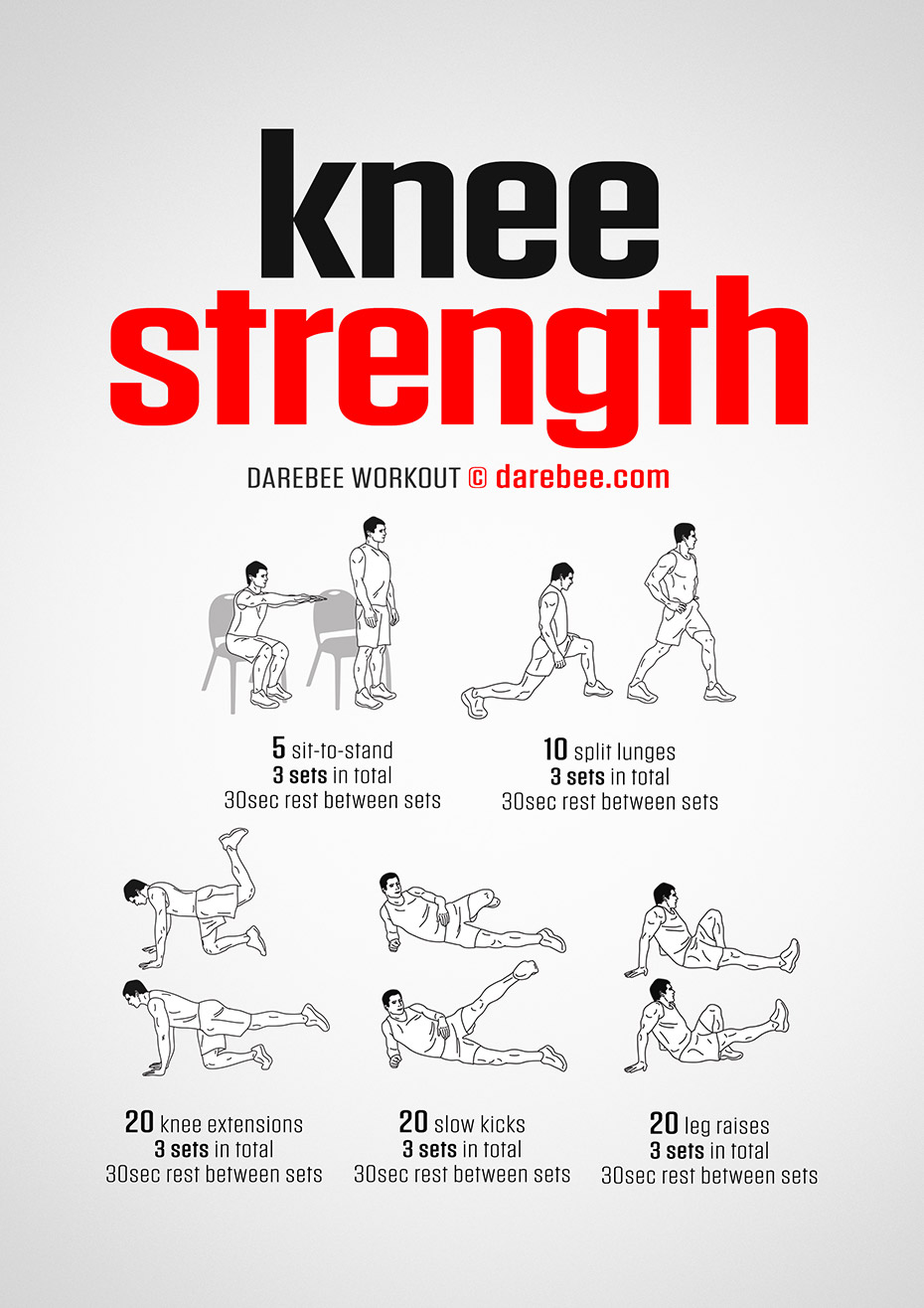
The Silent Language of Our Foundations
The human body is a marvel of engineering, a symphony of interconnected parts working in seamless, often unconscious, harmony. And at the heart of our locomotion, our balance, our very ability to navigate the world with grace and power, lie our knees. They are the unsung heroes, the complex hinges that bear the brunt of our adventures, our missteps, and the relentless march of time. Yet, for many, the story of their knees is one of silent anxiety, a quiet dread that builds with every creak, every twinge, every hesitant step.
I remember a time, not so long ago, when my own relationship with my knees shifted from casual indifference to a cautious, almost reverent, awareness. It wasn't a sudden, dramatic injury, but a gradual erosion of confidence. A slight ache after a long hike, a subtle stiffness upon waking, a fleeting feeling of instability that would catch me off guard. These weren't cries for help, but whispers of discontent, hints that the foundational pillars of my mobility were, perhaps, not as unshakeable as I’d once believed.
This experience, echoed by countless individuals who value their independence and vitality, spurred a deeper dive. Not just into exercises, but into understanding the intricate biomechanics, the subtle muscle imbalances, and the proactive strategies that could transform those whispers of discontent into a resounding anthem of strength. For the discerning individual, the knowledgeable seeker who understands that true health is an ongoing journey of informed action, this isn't merely a list of exercises. This is an invitation to reclaim sovereignty over your mobility, to forge a robust, resilient foundation for a life lived without limitations.
We are not merely presenting five movements; we are unraveling a philosophy. A philosophy that understands the knee as a nexus – a meeting point of power from the hips, stability from the core, and propulsion from the ankles and feet. Neglect one, and the others falter. Empower all, and the knee thrives. This journey into stronger knees is a testament to the power of intelligent, consistent effort, a story of rebuilding from the inside out, right within the comfort and control of your own home.
Decoding the Knee: A Masterpiece of Biomechanics
Before we delve into the practical application, let's establish a common ground of understanding. For the knowledgeable audience, merely knowing what to do isn't enough; we demand to know why. The knee joint, or tibiofemoral joint, is often described as a simple hinge, but this vastly underestimates its complexity. It’s a modified hinge joint, capable of flexion, extension, and a crucial degree of rotation when flexed, allowing for the subtle adjustments necessary for dynamic movement.
At its core, the knee is where the femur (thigh bone) meets the tibia (shin bone), capped by the patella (kneecap). This seemingly straightforward articulation is supported by an intricate network of soft tissues:
- Ligaments: The strong, fibrous bands that provide static stability.
- Cruciate Ligaments (ACL & PCL): Deep within the joint, forming an 'X', they prevent anterior and posterior displacement of the tibia relative to the femur. The Anterior Cruciate Ligament (ACL) is particularly vital for preventing the tibia from sliding forward and for rotational stability.
- Collateral Ligaments (MCL & LCL): On the sides of the joint, preventing excessive side-to-side motion. The Medial Collateral Ligament (MCL) protects against valgus (knock-knee) stress, while the Lateral Collateral Ligament (LCL) protects against varus (bow-leg) stress.
- Menisci: Two C-shaped cartilaginous discs (medial and lateral) that act as shock absorbers, increase the contact area between the femur and tibia, and contribute to joint stability. They are crucial for distributing forces and facilitating smooth joint movement.
- Articular Cartilage: A smooth, slippery tissue covering the ends of the femur and tibia, and the underside of the patella, reducing friction and allowing bones to glide effortlessly against each other.
- Muscles and Tendons: These provide dynamic stability and generate movement. The quadriceps femoris (rectus femoris, vastus lateralis, vastus medialis, vastus intermedius) extend the knee, while the hamstrings (biceps femoris, semitendinosus, semimembranosus) flex it. The calves (gastrocnemius, soleus) also play a role, crossing the knee joint and influencing its mechanics. The glutes (maximus, medius, minimus) are paramount for hip stability, which directly impacts knee alignment and stress.
Common knee issues, such as osteoarthritis, patellofemoral pain syndrome (runner's knee), IT band syndrome, and ligamentous injuries, often stem not just from acute trauma but from chronic imbalances, poor movement patterns, and insufficient dynamic stability. A sedentary lifestyle weakens the supporting musculature, while repetitive movements without adequate strength can lead to overuse injuries.
Our philosophy, therefore, is rooted in a holistic understanding. We're not just strengthening the muscles immediately around the knee; we're optimizing the entire kinetic chain. We're enhancing neuromuscular control, improving proprioception (the body's awareness of its position in space), and building resilience that transcends simple muscle bulk. This proactive approach is your shield against the vulnerabilities that can undermine your freedom of movement.
Now, let us embark on the practical journey, exploring five foundational movements that, when mastered and integrated, will tell a new story for your knees – a story of enduring strength and unwavering confidence.
>
The 5 Essential Moves for Stronger Knees at Home
Each of these movements has been carefully selected for its efficacy, its accessibility, and its profound impact on different aspects of knee health. They build upon fundamental principles, offering both foundational strength and nuanced stability.
1. The Wall Sit: For Unyielding Isometric Power and Endurance
The Story & Philosophy: The Wall Sit is a deceptively simple exercise, yet its profound impact on knee resilience cannot be overstated. It’s a testament to the power of isometric contraction – holding a position under tension without changing muscle length. In a world obsessed with dynamic movement, the Wall Sit reminds us of the crucial role of static strength, the quiet fortitude that underpins every step, every jump, every sustained effort. It’s about building the deep, unwavering endurance in your quadriceps and glutes that allows your knees to absorb impact and maintain stability without fatigue, particularly valuable in situations where your knees are held in a flexed, weight-bearing position. Think about prolonged standing, or the eccentric control required when descending stairs or a hill – the Wall Sit builds that silent, enduring power.
Muscles Targeted:
- Primary: Quadriceps femoris (all four heads – vastus lateralis, vastus medialis, vastus intermedius, rectus femoris).
- Secondary: Gluteus maximus, hamstrings, adductor magnus, calves (subtly for stabilization).
- Stabilizers: Core musculature (transversus abdominis, obliques) to maintain upright posture.
Step-by-Step Execution (The Art of the Hold):
- Preparation: Find a sturdy, flat wall. Stand with your back against it, feet about hip-width apart and 18-24 inches away from the wall.
- Descent: Slowly slide your back down the wall, bending your knees, as if you're sitting in an imaginary chair.
- The Perfect Angle: Continue descending until your hips are roughly at the same height as your knees, creating a 90-degree angle at both your hips and knees. Your shins should be perpendicular to the floor, and your thighs parallel. Ensure your knees are directly above your ankles, not caving inward or splaying outward.
- Engage and Hold: Press your entire back flat against the wall, engaging your core. Distribute your weight evenly through your heels and the balls of your feet. Actively push your feet into the floor and feel your quadriceps activate intensely. Keep your head and neck in a neutral position.
- Breathing: Maintain steady, controlled breathing throughout the hold. Avoid holding your breath.
- Release: When your time is up, slowly slide back up the wall to a standing position, controlling the movement.
Progression & Regression:
- Regression (Easier): Start with a shallower angle (knees less than 90 degrees), reducing the load. Gradually increase depth as strength improves. Hold for shorter durations.
- Progression (Harder):
- Increased Duration: Hold the position for longer periods (e.g., 60 seconds, 90 seconds, 2 minutes).
- Single-Leg Wall Sit: Once proficient with two legs, lift one foot slightly off the floor, placing the entire load on a single leg. Alternate legs.
- Weighted Wall Sit: Hold a dumbbell, kettlebell, or a stack of books on your lap for added resistance.
- Isometric Pulses: While in the Wall Sit position, perform tiny, almost imperceptible "pulses" – slightly lowering and raising your hips by an inch or two – to introduce a dynamic element.
Common Pitfalls & Solutions:
- Knees Caving In/Out: Often indicates weak glutes or improper foot alignment. Focus on driving your knees directly over your second toe, and actively push your feet into the floor. Imagine "spreading the floor" with your feet.
- Arching the Lower Back: This indicates a weak core or trying to compensate for leg fatigue. Actively press your entire back against the wall, engaging your abdominal muscles.
- Shallow Depth: While a valid regression, ensure you are striving for the 90-degree angle as strength permits to maximize quadriceps engagement.
- Holding Breath: Leads to increased blood pressure and reduces oxygen delivery. Maintain steady, controlled breathing.
2. Glute Bridges: For Posterior Chain Power and Hip-Knee Harmony
The Story & Philosophy: In the modern world, dominated by prolonged sitting, our posterior chain – particularly the glutes and hamstrings – often becomes dormant, weak, and underdeveloped. This leads to an over-reliance on the quadriceps and a cascade of biomechanical imbalances that can wreak havoc on the knees. The Glute Bridge is a foundational movement that awakens these sleeping giants, reminding the body where true power originates. It's about reconnecting the powerful engine of your hips to the stability and health of your knees. By strengthening the glutes, we not only improve hip extension and external rotation but also create a stable base that prevents the knees from collapsing inward (valgus collapse), a common precursor to many knee pains. This movement tells a story of balance, of recognizing that knee health is inextricably linked to the strength of the entire lower kinetic chain.
Muscles Targeted:
- Primary: Gluteus maximus, hamstrings.
- Secondary: Gluteus medius, gluteus minimus (stabilizers), erector spinae (lower back extensors), core musculature.
Step-by-Step Execution (The Hip-Driven Lift):
- Preparation: Lie on your back on the floor or a yoga mat. Bend your knees so your feet are flat on the floor, about hip-width apart. Your heels should be close enough to your glutes that you can just touch them with your fingertips. Your arms can rest by your sides, palms down.
- Engage & Lift: Before lifting, gently engage your core by pulling your navel towards your spine. Then, press through your heels, squeeze your glutes, and lift your hips off the floor.
- The Peak: Continue lifting until your body forms a straight line from your shoulders to your knees. Avoid hyperextending your lower back; the movement should be driven primarily by your glutes and hamstrings, not your lumbar spine. Your knees should remain aligned over your ankles, not splaying out.
- The Hold (Optional): At the top, pause for a second or two, consciously squeezing your glutes.
- Controlled Descent: Slowly lower your hips back down to the starting position, maintaining control throughout the movement. Don't just collapse.
- Repetition: Perform for desired repetitions, focusing on glute activation with each lift.
Progression & Regression:
- Regression (Easier): Reduce the range of motion. Focus on the initial lift and glute squeeze.
- Progression (Harder):
- Increased Repetitions/Sets: Build endurance.
- Single-Leg Glute Bridge: Lift one foot off the floor and perform the bridge with the other leg. This significantly increases the load on the working glute and challenges hip stability.
- Marching Glute Bridge: While holding the bridge position, alternate lifting one foot a few inches off the floor.
- Weighted Glute Bridge: Place a dumbbell, kettlebell, or a plate across your hips for added resistance. Pad the weight if necessary.
- Glute Bridge with Resistance Band: Place a mini-band just above your knees and actively push your knees outward against the band throughout the movement to engage the glute medius more intensely.
- Feet Elevated Glute Bridge: Place your feet on a low step or bench to increase the range of motion and hamstring engagement.
Common Pitfalls & Solutions:
- Lower Back Hyperextension: If you feel it more in your lower back than your glutes, you’re likely arching your back. Focus on engaging your core before lifting and stopping the upward movement once a straight line from shoulders to knees is achieved. Don't push beyond this point.
- Not Squeezing Glutes: Many individuals go through the motions without truly activating their glutes. Consciously squeeze your glutes at the top of the movement.
- Knees Splaying Out/Caving In: Keep your knees tracking directly over your ankles. If they tend to splay, a resistance band just above the knees can provide a tactile cue to push against. If they cave in, this is a sign of weak hip abductors (glute medius), and the band can help here too by providing resistance to push against.
- Pushing Off Toes: Ensure you are pushing through your heels to maximize glute and hamstring activation. You should be able to wiggle your toes at the top.
3. Terminal Knee Extensions (TKEs) with Resistance Band: For Patellar Tracking and VMO Precision
The Story & Philosophy: While compound movements build overall strength, sometimes the knee needs a more precise, targeted intervention. The Terminal Knee Extension (TKE) with a resistance band is that scalpel-like movement, designed to address specific weaknesses that often lead to patellofemoral pain and general instability. It’s a story of meticulous strengthening, focusing on the very end range of knee extension where the vastus medialis obliquus (VMO) – a crucial head of the quadriceps – plays its most significant role. The VMO is vital for pulling the patella medially, ensuring it tracks smoothly within the femoral groove. When weak, the patella can drift laterally, leading to friction and pain. TKEs, with the unique resistance profile of a band, create a specific challenge to this critical stabilizer, rebuilding the fine-tuned control that often goes unnoticed until it's compromised.
Muscles Targeted:
- Primary: Vastus medialis obliquus (VMO), vastus lateralis, vastus intermedius, rectus femoris (the entire quadriceps complex, with specific emphasis on VMO).
- Secondary: Hamstrings (as antagonists for controlled movement), glutes (for hip stability, especially when standing).
Step-by-Step Execution (The Controlled Extension):
- Preparation: Secure a light-to-medium resistance band around a sturdy anchor point (e.g., a table leg, heavy furniture) at knee height. Step into the loop with one leg so the band is behind your knee, resting in the crease.
- Starting Position: Take a step or two back from the anchor point until there is tension in the band, pulling your knee forward. Keep your working leg slightly bent (around 20-30 degrees of flexion). Your stance foot should be flat on the floor, and you can use your other leg for balance if needed, or perform this with both feet planted for more stability initially.
- The Extension: From this slightly bent position, actively push your knee backward against the band's resistance, straightening your leg until it is fully extended (but not locked out). Focus on squeezing your quadriceps, particularly the muscle just above and to the inside of your kneecap (your VMO).
- The Hold (Optional): At the point of full extension, hold for 1-2 seconds, really feeling the quadriceps contract.
- Controlled Return: Slowly allow the band to pull your knee forward, returning to the slightly bent starting position. Control this eccentric phase.
- Repetition: Perform for desired repetitions before switching to the other leg.
Progression & Regression:
- Regression (Easier): Use a lighter resistance band. Reduce the range of motion. Perform without a band initially, focusing on conscious quadriceps contraction.
- Progression (Harder):
- Stronger Band: Increase the resistance of the band.
- Increased Repetitions/Sets & Duration: Build endurance.
- Single-Leg Stance: Perform the TKE while balancing on the working leg, challenging proprioception and hip stability.
- Varying Angles: Experiment with slightly different starting angles of knee flexion (e.g., 45 degrees) to target different aspects of the quadriceps.
- Eccentric Focus: Slow down the return phase (the band pulling your knee forward) to 3-5 seconds to emphasize eccentric strength.
Common Pitfalls & Solutions:
- Relying on Momentum: The movement should be slow and controlled, not a quick snap. Focus on muscle activation.
- Hyperextending the Knee: While aiming for full extension, avoid jamming or locking out the knee joint. The focus is on muscle contraction, not joint stress.
- Too Much Band Resistance: If you can't control the movement or feel excessive strain, the band is too strong. Start light.
- Not Feeling the VMO: If you struggle to activate the VMO, try placing a finger on the muscle (inner thigh, just above the kneecap) to establish a mind-muscle connection. Consciously try to "flex" that area.
4. Bulgarian Split Squats: For Unilateral Strength, Balance, and Mobility
The Story & Philosophy: The world we inhabit is fundamentally unilateral. We walk, run, climb stairs, and navigate uneven terrain, all predominantly on one leg at a time. Yet, many strength training routines focus heavily on bilateral movements (e.g., squats, deadlifts). The Bulgarian Split Squat is a powerful antidote to this imbalance, telling a story of real-world strength and nuanced stability. It’s about building formidable strength in each leg independently, exposing and correcting imbalances between sides, and simultaneously challenging balance and hip mobility. This exercise forces your knee to stabilize under load, mimicking the dynamic stresses of daily life, and preparing it for the unpredictable demands of movement. It builds not just muscle, but also the crucial proprioceptive awareness that guards against injury.
Muscles Targeted:
- Primary: Quadriceps (working leg), Gluteus maximus (working leg), Hamstrings (working leg).
- Secondary: Gluteus medius/minimus (working leg for stability), Hip adductors, Calves, Core musculature (for balance).
Step-by-Step Execution (The Unilateral Challenge):
- Preparation: Stand a few feet in front of a low, stable surface (e.g., a sturdy chair, bench, or step) that is about knee-height. Place the top of one foot (laces down) on the elevated surface behind you. Your front foot should be far enough away that when you descend, your front knee remains roughly over your ankle.
- Stance Setup: Ensure your front foot is directly in front of your hip, not too wide or too narrow. Your weight should be predominantly on your front leg. Maintain an upright posture, shoulders back, chest proud, core engaged.
- Descent: Inhale and slowly lower your body by bending your front knee and hip. Your back knee will descend towards the floor. The goal is to lower until your front thigh is roughly parallel to the floor, or slightly below. Your front knee should track directly over your second toe, avoiding caving inward or splaying outward.
- The Bottom: At the bottom of the movement, your front knee should be aligned over your ankle, and your back knee should be just above the floor. Avoid letting your front knee extend too far past your toes, which can place undue stress on the joint, though some natural forward lean is acceptable and necessary.
- Ascent: Exhale and powerfully drive through your front heel and midfoot, engaging your glutes and quadriceps to push back up to the starting position. Maintain control and balance.
- Repetition: Complete all repetitions on one leg before switching to the other.
Progression & Regression:
- Regression (Easier):
- Lower Elevation: Use a lower surface for your back foot.
- Shorter Range of Motion: Don't go as deep.
- Assisted: Hold onto a wall or sturdy object for balance.
- Progression (Harder):
- Increased Depth: Go deeper into the squat, challenging mobility and strength.
- Weighted: Hold dumbbells in each hand, or a kettlebell in the goblet position.
- Pause at the Bottom: Hold the lowest position for 1-3 seconds to increase time under tension and challenge stability.
- Slower Eccentric: Control the lowering phase over 3-5 seconds.
- Higher Elevation (Advanced): Using a slightly higher surface for the back foot increases the stretch on the hip flexor of the back leg and demands more from the front leg.
Common Pitfalls & Solutions:
- Unstable Back Foot: Ensure your back foot is relaxed and the top of your foot is flat on the surface, not just your toes. This reduces tension in the ankle and allows for better focus on the working leg.
- Knee Caving In/Out: This is a common indicator of weak glutes or poor motor control. Focus on actively driving your front knee outward, tracking over your second toe. Imagine "screwing" your front foot into the floor.
- Too Much Forward Lean: While some forward lean is natural, excessive leaning can shift stress to the lower back and reduce glute activation. Keep your torso as upright as possible.
- Lack of Depth: Don't be afraid to go deep, as long as your form is good. The deeper range of motion provides greater muscle activation and mobility benefits.
- Poor Balance: This is normal initially. Start with a lighter load or hold onto something for support until your balance improves. Focus on a non-moving spot in front of you.
5. Calf Raises: For Ground-Up Stability and Eccentric Control
The Story & Philosophy: The calves are often seen merely as propulsive muscles, driving us forward. But their story, particularly in the context of knee health, is one of profound impact absorption and ground-up stability. They are the initial shock absorbers of every step, and their strength, especially their eccentric control (the ability to lengthen under tension), is paramount for protecting the knee from the jarring forces of movement. Weak or inflexible calves can alter ankle mechanics, which in turn influences the entire kinetic chain up to the knee, potentially leading to issues like Achilles tendinopathy, shin splints, and even patellar tendonitis. Calf Raises, with a focus on both concentric and eccentric phases, are about building a resilient foundation from the ground up, ensuring that the critical link between your foot and your knee is robust and responsive.
Muscles Targeted:
- Primary: Gastrocnemius (superficial, crosses knee joint), Soleus (deeper, does not cross knee joint).
- Secondary: Tibialis posterior, peroneals (for ankle stability).
Step-by-Step Execution (The Rhythmic Pump):
- Preparation: Stand tall with your feet hip-width apart. You can hold onto a wall or sturdy object for balance, especially when starting. For an increased range of motion, stand with the balls of your feet on an elevated surface (e.g., a step, thick book) with your heels hanging off.
- The Ascent (Concentric): Slowly and deliberately raise yourself up onto the balls of your feet, lifting your heels as high as possible. Focus on a controlled, powerful contraction of your calf muscles.
- The Peak: At the very top, pause for a moment, squeezing your calves. Ensure your ankles are stable and not rolling inward or outward.
- The Descent (Eccentric): Crucially, slowly and with extreme control, lower your heels back down. If on an elevated surface, allow your heels to drop below the level of the step, feeling a stretch in your calves. This eccentric phase is vital for building resilience. Aim for a 2-3 second descent.
- Repetition: Perform for desired repetitions.
Progression & Regression:
- Regression (Easier): Perform with both feet on flat ground. Use ample support for balance. Reduce the range of motion.
- Progression (Harder):
- Single-Leg Calf Raises: Perform the movement on one leg at a time. This significantly increases the load and challenges balance.
- Weighted Calf Raises: Hold dumbbells in your hands or wear a weighted vest.
- Eccentric Focus: Emphasize a super slow, controlled descent (4-5 seconds) to maximize eccentric strength gains.
- Varying Foot Position:
- Toes Pointed Straight: Targets both gastrocnemius and soleus.
- Toes Pointed Out (externally rotated): Emphasizes the medial head of the gastrocnemius.
- Toes Pointed In (internally rotated): Emphasizes the lateral head of the gastrocnemius.
- Bent Knee Calf Raises: Performing calf raises with slightly bent knees primarily targets the soleus, which is crucial for postural stability and endurance.


